 | ||
| While pruning my roses, I started thinking about thorns. 'L.D. Braithwaite is loaded. |
Thumbing through a compilation of favorite sayings, you might find 300 or more quotes referring to roses. Many of these adages also mention the dreaded thorns. For instance, Anne Bronte wrote “he that dares not grasp the thorn should never crave the rose.”
And of course we all know “every rose has its thorns.”
But the truth is, those nasty spikes we call thorns are not thorns at all. Botanists actually call them prickles.
According to the American Rose Society, a thorn is a branch of a plant that becomes woody, hard and pointed. Cactus plants, locust trees and many varieties of citrus have thorns. These thorns are deeply embedded in the plant itself and are difficult to break off.
 | |
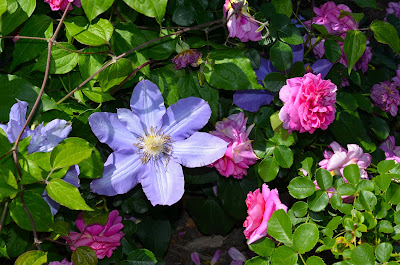
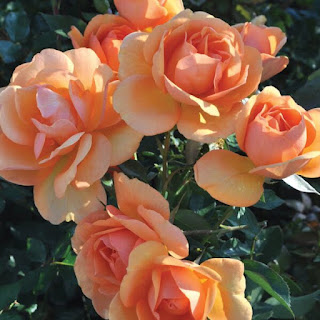
| The Bourbon rose 'Zephirine Drouhin' is thornless |
Rose prickles, on the other hand, can be snapped off quite easily since they are part of the outer layers of the stem. Just give a prickle a little push sideways and see what happens.
Prickles are smaller than thorns and are useful in helping roses climb across other plants. They can also give potential predators a painful rebuke. (Tender bunny feet hate thorns.)
Although prickles aren’t supposed to be as intimidating as thorns, my arms, legs and face can’t tell much of a difference. When I’m out doing a little impromptu pruning and neglect to dress properly, I come in covered with scratches. I always tell people it’s because my roses love me and want to give me hugs.
Seriously, however, there’s an important reason to protect yourself from prickle punctures.
Commonly known as rose thorn disease, Sporotrichosis is an infection caused by the fungus Sporothrix schenckii that usually affects the skin but can spread to other parts of the body. Infections in the joints, lungs and central nervous system are possible, although rare.
 |
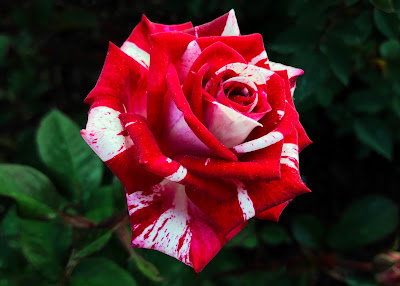
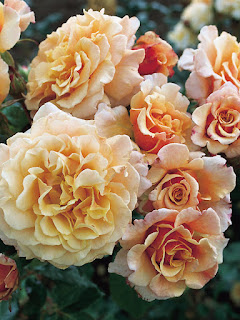
| 'James Galway' doesn't snag me |
The fungus is found naturally in soil, on the tips of rose thorns, on sphagnum moss and hay. It enters the skin through small cuts or abrasions and first appears -- sometimes several weeks after getting pricked – as small bumps. Left untreated, these bumps can later develop into open sores.
The best advice is to completely avoid this ugly disease by wearing long sleeves and sturdy gloves while working around your roses. I truly love my Bionic Gloves – they are triple layered goatskin gauntlet gloves designed by a hand surgeon that protect my arms up to the elbows. After a weekend of serious pruning I ended up with nary a scratch, avoiding a potentially thorny situation.
 |
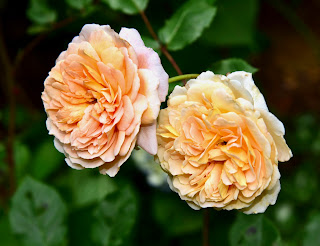
| 'The Lark Ascending' will sting me when she can |
Kahil Gibran noted that “the optimist sees the rose and not its thorns; the pessimist stares at the thorns, oblivious to the rose.”
I admire the rose but remain mindful of the thorns just to be safe. And I say thorns because even though I know better, I can’t bring myself to call them prickles.
“Every rose has its prickles” simply doesn’t sound right.
And I prefer the sentiment of this German proverb: “Instead of complaining that the rosebush is full of thorns, be happy the thorn bush has roses.”









 Posts
Posts


-
Follow Us on Twitter!
-
"Join Us on Facebook!
-
RSS
Contact